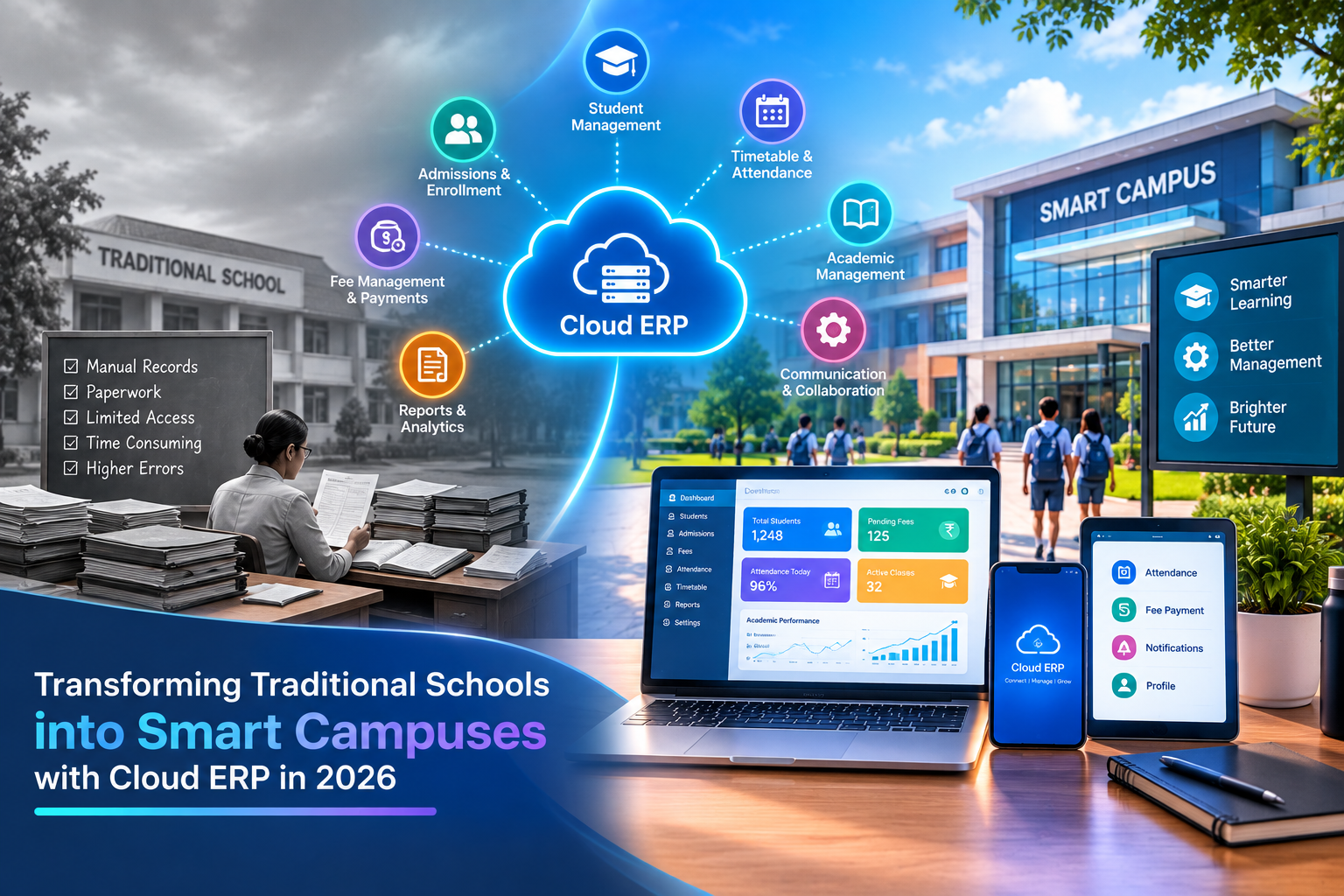
The education sector is undergoing a massive digital evolution. Traditional pen-and-paper record keeping and fragmented administrative tasks are rapidly being replaced by centralized Cloud-Based School ERP Solutions. In 2026, modern schools, colleges, and coaching institutes are prioritizing automated workflows to enhance transparency, improve student performance tracking, and reduce operational overheads.
1. The Shift from Manual Records to Cloud Automation
Running an educational institution involves managing thousands of data points—from student admissions and fee receipts to daily attendance and examination marks. Relying on standalone spreadsheets or local computers often leads to data silos and human errors. A unified school management software brings every department onto a single secure platform.
- Centralized Student Information System (SIS): Access complete student histories, academic records, and contact details instantly from any authorized device.
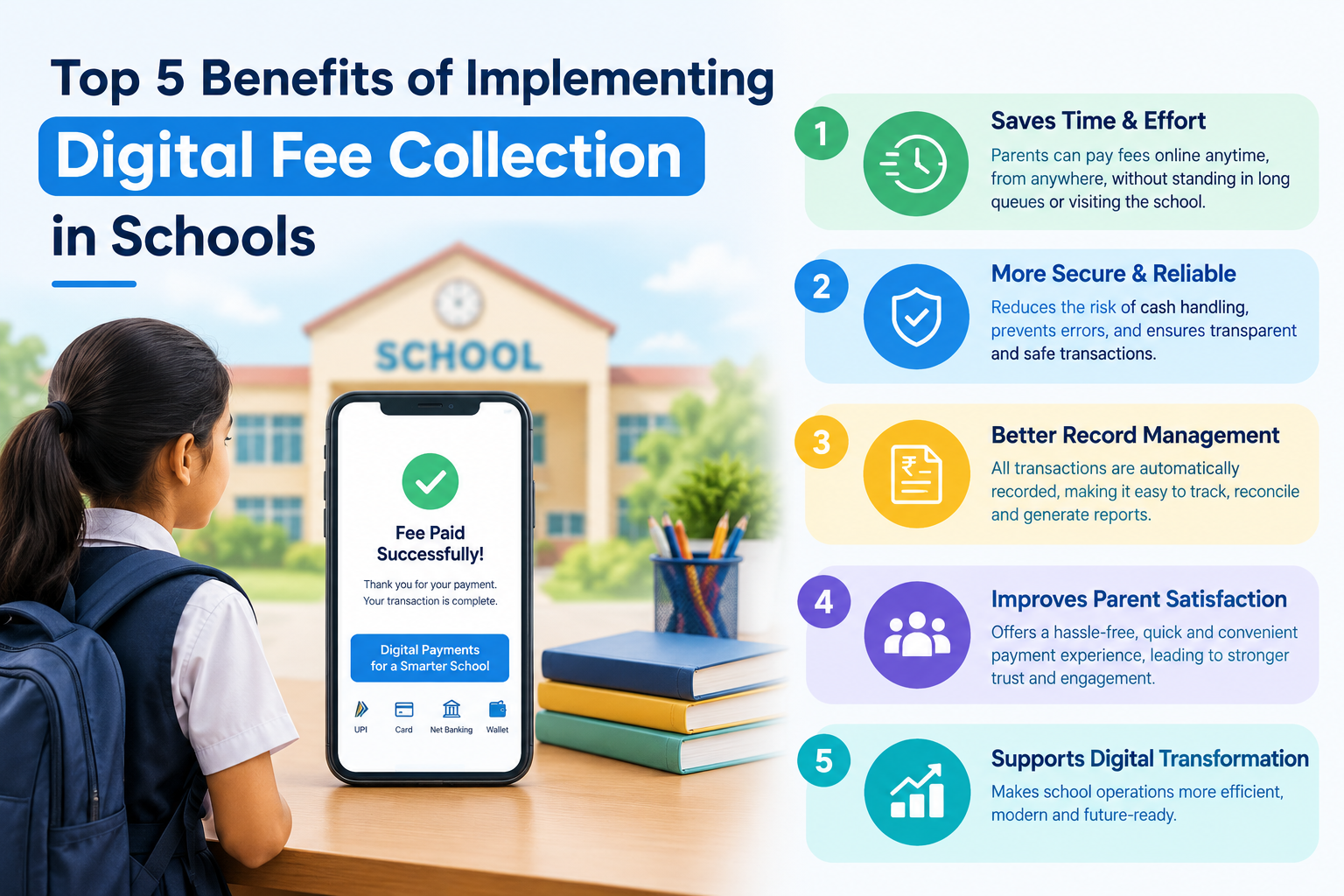
- Automated Fee Accounting: Generate digital receipts, track pending dues, and minimize manual cashier queues during fee collection cycles.
- Instant Parent-Teacher Communication: Bridge the communication gap by sending automated SMS and WhatsApp alerts regarding student attendance and homework.
2. Enhancing Administrative Security and Uptime
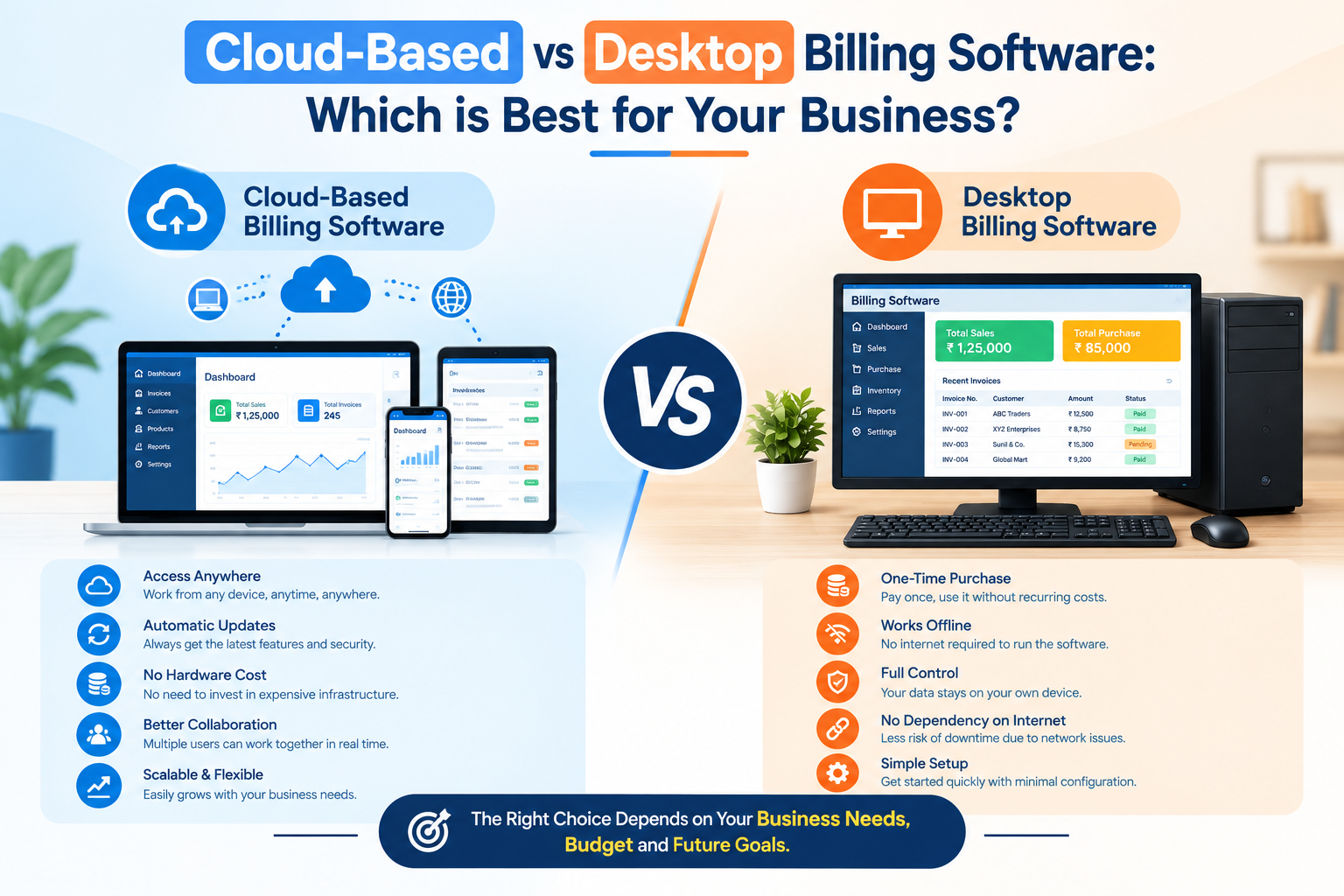
Data security is paramount when managing sensitive student and staff credentials. Cloud ERP architectures offer enterprise-grade encryption, role-based access control, and automated daily backups, ensuring that institutional data remains protected against physical damage or ransomware threats.
Recommended Hardware for Smart Administration
To set up an efficient administrative desk for managing cloud software and digital attendance portals, check out this high-performance Ergonomic Wireless Keyboard and Mouse Combo available on Amazon. It offers long battery life and comfortable keystrokes for daily office work.
3. Key Modules Every Smart School ERP Must Have
When selecting or upgrading an institutional software suite, ensure it includes these essential functional pillars:
- Biometric Attendance Tracking: Real-time logging for both students and teaching staff.
- Examination & Gradebook Management: Automated mark-sheet generation supporting flexible grading structures.
- Transport & Hostel Tracking: Route allocation and vehicle monitoring for student safety.
Conclusion
Adopting a cloud school ERP is no longer just an optional luxury—it is a core necessity for institutions aiming to deliver quality education efficiently. By streamlining administration, schools can focus more on teaching excellence and student growth.