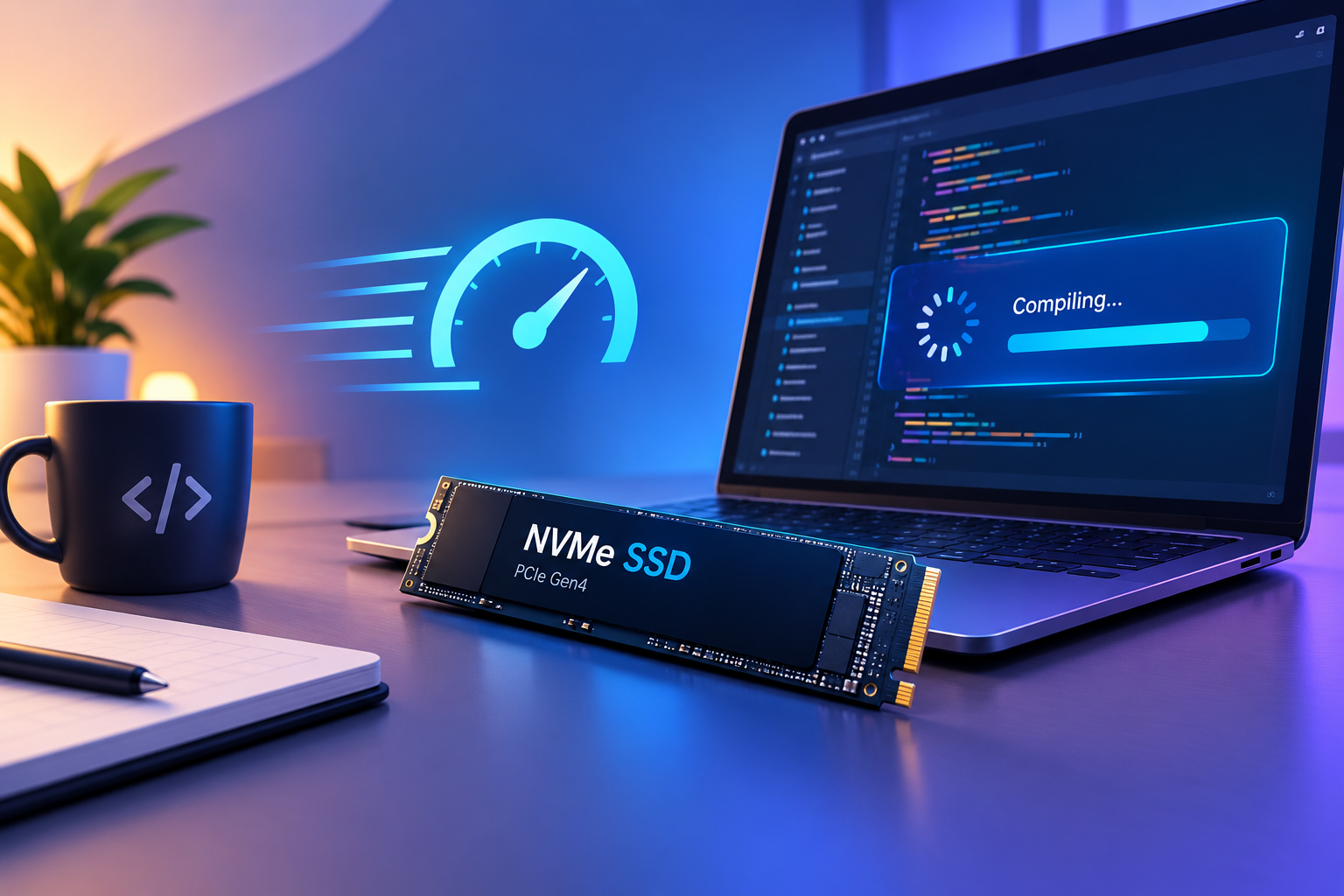
When software developers talk about improving productivity, the conversation almost always revolves around code editors, framework optimizations, or database indexing. However, one of the most significant bottlenecks in a programmer's workflow is purely hardware-bound: storage read and write speeds. If your local development environment lags when spinning up Docker containers, running heavy database migrations, or compiling massive source codebases, your hard drive might be holding you back.
The Impact of Storage Speed on Development
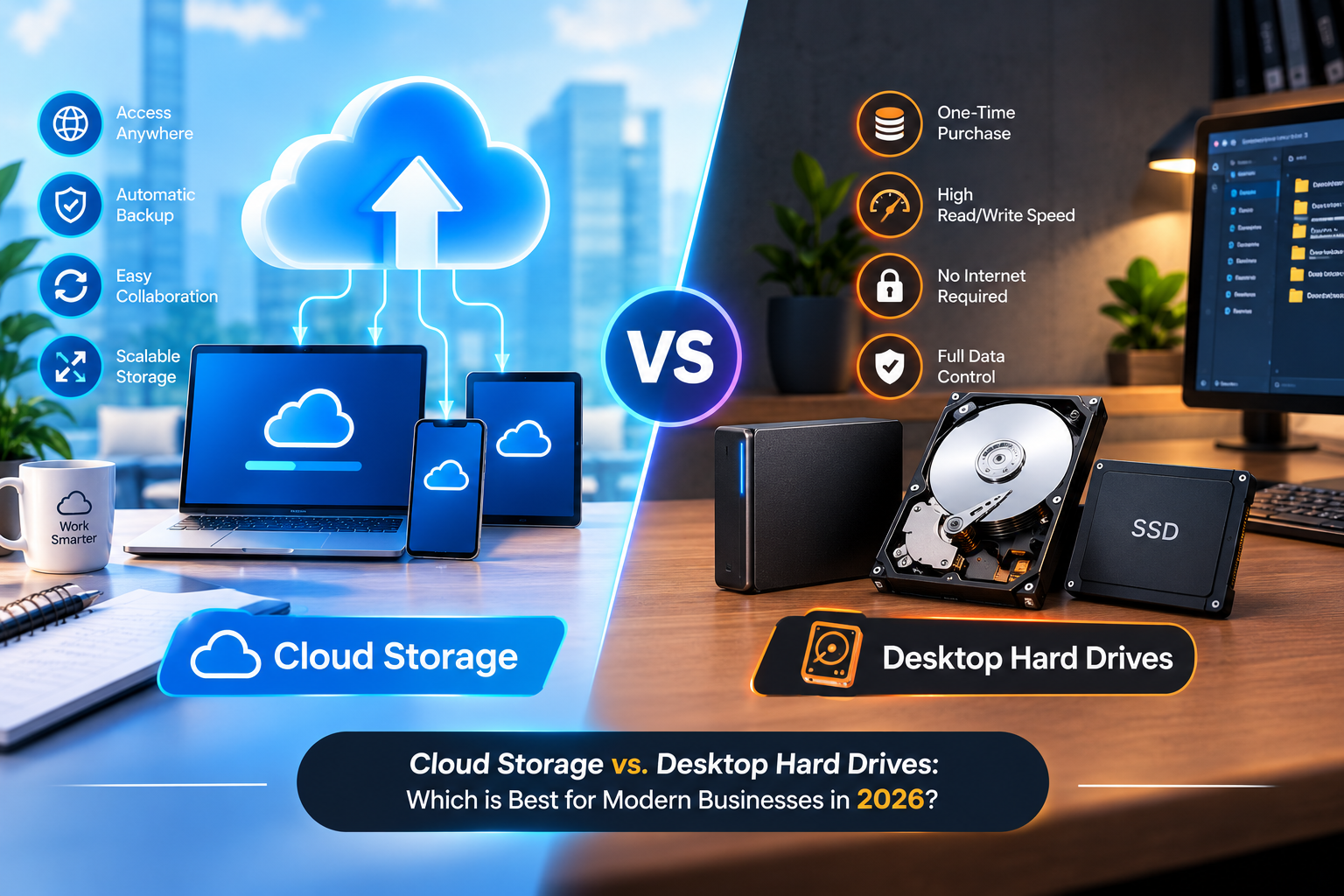
Modern web applications, local staging servers (like XAMPP or Docker stacks), and heavy IDEs like VS Code or PHPStorm constantly read and write thousands of small files simultaneously. On traditional Hard Disk Drives (HDDs) or older SATA SSDs, these sequential and random IOPS operations create micro-stutters that accumulate into hours of wasted waiting time every week.
Why NVMe SSDs are a Game Changer for Programmers
Transitioning to a high-speed PCIe NVMe M.2 Solid State Drive delivers massive performance advantages:
- Lightning-Fast Code Compilation: Large projects with thousands of vendor dependencies compile significantly faster when the system isn't waiting on slow disk bottlenecks.
- Instant Local Database Queries: Local MySQL or PostgreSQL database imports and dumps that used to take minutes finish in mere seconds.
- Rapid System Boots & App Launches: Your operating system, local servers, and code editors boot up instantly the moment you power on your machine.
Recommended Upgrade for Your Workstation
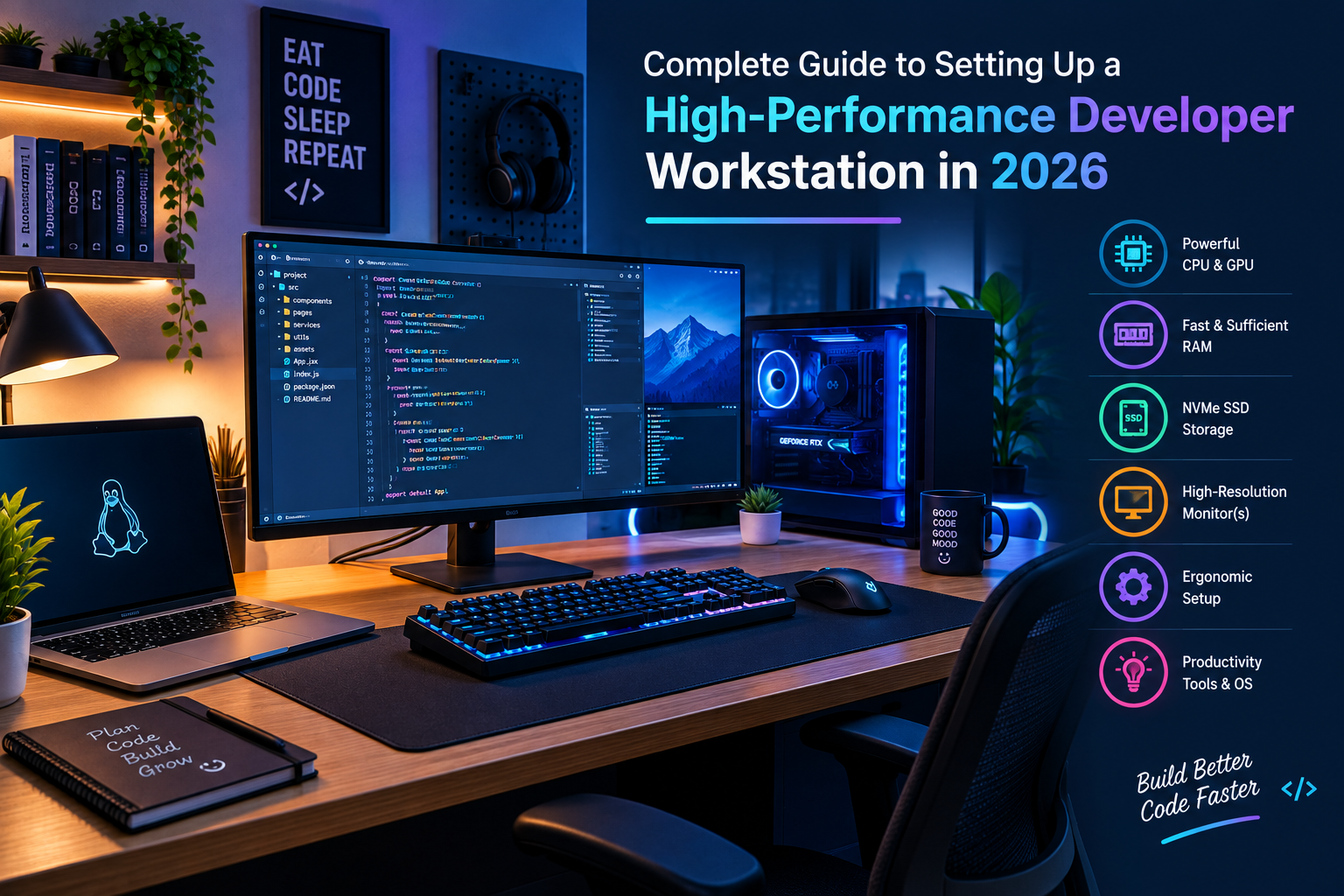
If you are looking to upgrade your development laptop or desktop rig, investing in a reliable, high-performance storage drive is the best first step. For instance, upgrading to a high-speed Crucial NVMe M.2 SSD provides incredible read/write speeds that effortlessly handle heavy multi-threaded compiling and local server virtualization.
Conclusion
Your hardware is the foundation of your digital workspace. Upgrading to an NVMe SSD eliminates frustrating lag spikes, streamlines your daily programming workflow, and lets you focus entirely on writing clean, efficient code without hardware friction.